
Developing Future Leaders Webinar
Leaders Are Developed in the Work, Not the Classroom
→ Read the full transcript
=== Welcome And Webinar Housekeeping ===
Steve Kepp: Hi, I am Steve Kepp, co-founder of From Day One, our Forum on Corporate Values, and I'm looking forward to hosting today's webinar. But before we do, I wanna share something special we have for attendees of today's webinar. Our next monthly virtual conference on Wednesday, April 21st is titled Digital Tools for Building an Engaged Productive Team. This is our most hands-on and practical conference of the year.
If you're an HR professional and you've been trying to get your head around the digital tools and options available for collaboration, employee engagement, diversity inclusion metrics, avoiding bias and recruiting, and many other topics, this is a one for you. And thanks to our partners and today's sponsor, we have some comp VIP tickets available for those who have joined today's webinar. That's you. I'm putting a link in the chat right now. You'll wanna take advantage of this one.
The price for our conference tickets is $149, and this link will give you a free VIP ticket for the whole day's activities. And now on to today's webinar.
Today we'll be exploring how new leadership tr, uh, trends are changing the way we develop future leaders as the workplace wrestles with remote work, social justice issues, mental health challenges, digital transformation and political unrest. How does this affect the way we view and develop our leaders? We expect leaders to set the tone, paint a vision and remove obstacles to allow work to get done. Identifying the latest leadership trends is critical to inform what expectations, skills and mindsets leaders need today as they rally their teams for the future.
This will be a practical, engaging and data rich webinar as the Stewart Leadership organization shares their latest research, the LEAD NOW! Leadership Development Trends Report. Stewart Leadership surveyed over 300 human resource leaders across more than 15 industries within the US to learn about their leadership development. Stewart Leadership will reveal key research findings along with actionable insights to expertly guide, challenge and elevate your organization's leadership capability and success.
Our sponsor today is Stewart Leadership. I'll tell you a bit about them. They're a leadership, change and talent development, consulting, coaching and training company. For over 40 years, they've been building leaders for Fortune 500 and mid-size companies, government agencies, and startups.
Now a few quick logistical items. This webinar is being recorded and will be available on demand soon after the event, so you can look out for an email in about 24 hours with the link. That email will also have info on how you can get professional development credits for this session from the Society of Human Resource Management, and you can find a written account of the Stewart Leadership study available now on our website at From Day One.
Now I'd like to introduce our speaker, Daniel Stewart, who's the president, executive consultant, and coach at Stewart Leadership. Okay, Daniel, over to you.
=== Introducing The Lead Now Research ===
Daniel Stewart: Cool. Thanks Steve. Appreciate the great intro, as well as the great partnership with, uh, From Day One for this survey as well as the webinar today. Hello everybody. It's a pleasure to be here with you, especially to share some exciting trends that we've been able to discover through this survey.
So today I want us to be able to balance the desire between the, the data geek within all of us that we want to dive deep, with, with the practical implementer, because we all wanna be able to then act on these things, and as well, that's the point for us to be able to work together in our own teams and organizations to be able to develop better leaders. We've all experienced quite a year, and we all recognize the power and impact that great leadership has. And so let's dive in to see what insights we can learn. By the way, if you'd like the full report, as Steve mentioned, you're also welcome to go to stewartleadership.com/research and download the full report at any point.
Let's dive in. Today we're gonna do three things. First, we're gonna talk about a lot of the insights, some of the most prominent insights that came from this survey. Second, we're gonna talk about some of the solutions, things that are working and maybe not working as we're all seeking to develop leaders within our teams and organizations. And third, we're gonna talk about actions and strategies, ways that we may be able to then implement some of these ideas.
First, let me start with a story. It's around lunchtime for many of us, some of us maybe have just eaten, a few of us who are planning on eating soon. At the risk of getting us a little hungry, let me share a story that happened several years ago in a very upscale, nice restaurant. There was a chef who wanted to be able to please and provide fantastic experience for each of their customers. One day one of the customers started to complain about the steak fries they had been served.
They said they were too thick, they didn't like it, a little picky, but the chef said, okay, fine, I'm gonna fix this. And so the chef decided to cut a new set of potatoes much thinner so that those french fries would hit the spot for the customer, brought it back out to the customer. The customer did not like them, so they were still too thick, frustrated and not really quite sure what to do next. And somewhat at desperation, the chef decided to take out some fresh potatoes and cut them so thinly that no fork could pierce them.
And he thought, this is about as thin as I could cut 'em. He fried them up, served them to the customer, and the customer loved them. And in fact, it became a big hit for many of the other customers for this restaurant. Yes, this actually is the true story of how the potato chip came to be in Saratoga Springs, New York, many, many years ago.
But I also think of all of us on this call today, I think of us in many ways like that chef, always trying to identify the right solutions to help develop leaders into the best possible leaders they can be. Sometimes those solutions aren't received in the way that we would like them to be received. And so we go back, we innovate, we partner, we strategize, and we create new and different solutions. Today, after the year that we've had, we may need to create new and innovative solutions. Let's dive in and better understand some of the insights that will help us innovate for tomorrow's leaders.
This survey is also based on a fantastic leadership development model called LEAD NOW! You're welcome to look on our website for more information about that, but the survey is built and designed in the spirit of LEAD NOW! It is a model that's been used for many, many years with thousands of leaders, and it is built around results, accomplishing business and people results. And it's also based upon the premise that leaders learn best by doing, and that's what we want to do.
So we've kind of curtailed, looked at all the survey results and curtailed and summarized into the top 10. The top 10 questions that we'll be able to answer and talk about today as we spend our time together. First, what is the economic growth outlook? What are the top five strategic imperatives for organizations out there? What are the leadership development priorities for the next 18 months? How prepared are our leaders, especially to deliver needed results?
Who has a leadership development plan, and what is the level of confidence that folks have in their plan? At what level of, of investment is leadership development happening? What is the desired future leadership style that we need to see more of in organizations? What are the most important leadership development topics for the next 18 months? What might prevent leadership development from being effective? And lastly, what are the best leadership development approaches out there?
We're going to go through these and again, provide as much insight and action. My invitation to everybody is to reflect on how you are currently doing in developing your leaders. Compare and contrast, take notes and to identify at least one thing at the end of this that you'll be able to want to act, act on and implement.
=== Survey Demographics ===
First, some survey demographics. This is the data geek within all of us wanting to understand who really were asked these questions. 85% of all the respondents identified themselves from a human resources perspective. That's the area that we are then focusing on. However, they came from a variety of industries, over 15 different industries were represented, and you can see here such distribution. It's clearly not just focused around one or two or three industries.
Also the organizational size, it ranged from organizations that were 10 billion and larger. And then as you go around the circle here around the left, you can see all the way down to some organizations that were less than 50 million, but there was a very healthy distribution as it went through all different sides.
And then as we look at the different levels of the organization, that was then an equal or a very fair representation across all levels, from the C-suite to the VP, SVP, manager, director, manager, as well as individual contributors. The majority of all respondents have direct reports, at least at a manager or above level, so you can start to see the size as well as the level representation across the data that we're gonna be diving into.
Now we also looked at generation. Very interesting to look at, because here we have something that helped inform us as well. We really function in a three generation workforce, at least as we speak of leaders based upon the survey results in this survey. Gen Xers hold most of the leadership positions according to those who responded to this survey. And then there was a fairly equal distribution among the baby boomers and then the millennials, the Gen Z folks have not yet made it into the leadership ranks. Thus they had a very small representation, at least in terms of this survey. Very interesting for us as we're all striving to be able to develop leaders, the bulk of our current leadership is Gen X.
=== Economic Outlook And Strategic Imperatives ===
Okay, what is the economic growth outlook, especially after such a crazy year of a pandemic, quarantine, uncertainty in the markets, all sorts of things going on. What are people's mindsets? I have some great news folks. 80%, 80% of everyone who was surveyed indicated some to significant growth in the next 18 months. Only 5% said that they would be anticipating negative growth.
This is remarkable. The level of optimism and confidence in the future, especially in contrast to six, 12 months ago, is a comforting thought. So again, what does that mean? How does that look for as we're seeking to develop and grow leaders? At least we're starting from a point of growth broader within the marketplace.
So what are the top imperatives for organizations? The top five strategic imperatives became very clear as we then looked at all of the responses, and in fact, the top five encompassed 75% of all of the respondents. So first, engaging and retaining employees, 19% of all respondents said this is the number one thing that we need to focus on as an organization. Second, building an inclusive culture. Third, aligning strategic direction. Fourth, finding the right balance between remote, hybrid and in-person working, and then also upskilling leaders to lead change and transformation. These five stood out consistently, no matter how we slice the data, as the key strategic organizational efforts that are underway and that organizations are striving to achieve.
Now let's dive a little deeper as we look at levels in the organization. Who said what from their own perspective? Let's take a look. The C-suite actually was most committed to engaging and retaining employees in terms of their organizational imperatives. And then the largest representation for the senior managers and directors, that yellow, was actually around building an inclusive culture, which in some ways is not surprising, and we're gonna talk more about this later on.
We often call them the middles, the middles, the middle management of the organization. They're the ones who have to translate the strategy and yet become the most close to those who are on the frontline. They can enact huge implications and results and impact for those who are closest to the customer, and they're wanting to build a more inclusive culture. In many ways, this was very heartening as we looked at this data. As we look at it from a generational perspective, let's dive a little deeper.
We can see that baby boomers and Gen Xers were both very much focused around engaging and retaining employees as well as building an inclusive culture. And millennials really focused around, their number one area was around building an inclusive culture. So again, a lot of commonalities that enable us to then focus and build for the future. And in fact, a lot of this coalesces around some ideas, mainly around ma, moments that matter.
We find that in the workplace it often comes down to these moments that matter as determining an inclusive culture, as determining ways to be able to build and strengthen together, especially having development conversations. With additional research that we've provided, we've actually identified the top 10 moments that matter the most, and organizations that are able to focus on these are able to build a more development focused and inclusive culture.
Some of these include onboarding during the first few months, a feedback or coaching discussion with supervisors, receiving career and professional development, a performance review discussion with supervisors, setting performance goals, that, that conversation itself, making sure that, that goes well. Receiving recognition from peers and supervisors for a job well done. Receiving a promotion itself. That conversation the first day with the organization, a pay raise discussion and applying for a position. Organizations that are able to distill down and focus on those moments that matter often are able to then better address those strategic imperatives that we were just detailing.
Now many of you are saying this is helpful, but is there a tool that we might use to better map out and structure these moments that matter to accomplish these strategic imperatives that we're seeing? Let me share one tool, an individual journey mapping tool, and I can give an example as well. The idea is you take any one of these moments that matter, and you can then take a current example, and as the experience unfolds, identify what was positive about it, what was neutral or what was negative, and then ultimately be able to map out what would you like to have happen, and then construct development efforts to obtain it.
One quick example, as you think of the journey mapping process for an onboarding moment, that first day, what might it look like? Well, perhaps the drug test and badging that preceded that first day that led up to it. Easy to go. Alright, overall positive orientation. The day itself, great, was well put together. However, my manager did not show up, whether it was in person or virtual, I was kind of left on my note, my own after that.
Ah, but the next day after that, the team brought me donuts, or they sent me donuts, if it was a virtual situation. Shoot, my computer is not working. My login, and frankly didn't even show up. Ooh, I was assigned Jane as a mentor. It's been tremendously helpful. I still don't have my computer. Ooh, finally got my computer and login works. However, where's my manager? I've hardly seen her.
You start to map this out, and quickly it becomes clear how the moments that matter are showing up to people, because people really remember these moments that matter, and they often will determine the perceptions around, are we in a development, the developmentally, I'm trying to say that word, developmentally focused culture, particularly one that's inclusive. If you want additional tools and resources, at the bottom of the screen here, you're welcome to go to our website under webinars, and there's an archive webinar that details so many of these tools as well.
=== Leadership Development Priorities And Coaching Mindset ===
Next, as we continue around the top 10, let's look at the leadership development priorities for the next 18 months. As we look at some of this data, I wanna draw your attention to this first one on the right, 22%, promote development conversations and action plans. The number one priority, the number one thing that we want to keep in mind.
Oops, lemme jump back here. I, in fact, as you look at these priorities going from the promote development conversations, the next one is micro learnings and virtual tools. Not surprising in terms of the age that we are in right now, for many of us in a hybrid or often virtual environment. The next actually was a little surprising to us. We did not realize it would be this high, it's the cohort development programs for specific audiences. It was not the idea of just focusing on one-off efforts but rather creating a cohort of people to foster that connection.
And then the fourth area is the back to basics. Focusing on the nuts and bolts of managing, of the soft and the hard skills. 78% of all respondents fit into one of these four top areas. What was not highly rated were these three other areas, where it was really focused specifically by level and by the individuals in each level, either at the C-suite, the VP, SVP, or directors. Not to say this is not happening, but it's not necessarily the priority for the next 18 months.
Let me uh, move on to this next screen here. As we look at generations, we can then look at and say alright, how does a generational perspective add? What were the respondents who identified themselves in each generation respond to some of these priorities over the next 18 months? What's interesting here, let me draw, was how the baby boomers and the Gen Xers both agreed that their number one priority was in development conversations and action plans.
It reinforces that moments that matter idea even more, because suddenly we have development efforts coming down to that individual conversation that becomes the essential unit of analysis and action that we want to use to build any leadership development effort around. None of this is talking about event only focused things. It is really around those conversations, and then also you look at millennials, and their response was fairly evenly matched across the top four. There seems to be such a eagerness to learn that any of these priorities, yes, just wanna dive into it. Let's get some more. I wanna learn, learn. There's a hunger there.
As we keep in mind some of this data, so much of the one-on-one conversations often comes down to a coaching mindset, because in order for these conversations to be effective, the boss needs to be able to have that effective coaching conversation. Here are some six, our six keys for a coaching mindset to be able to keep in mind, and I share this as a tool as you are then developing the managers to have those individual conversations.
First is to help them, identifying coachable moments, because by far most of their coaching experiences will be on the fly, informal, not necessarily formal conversations, and they need to be able to catch and utilize those coachable moments. And then also asking more than telling. We're actually gonna see later on in the data the value and the desire of this as a style moving forward.
The asking more than telling, building that trusting relationship, getting to know and making sure the other person knows that you have their best interest at heart. Also recognizing the level of coachability of the employee, and moderating and adjusting your coaching approach based upon how receptive the other person is. Also creating the right setting, making sure the physical venue, whether it's in person or virtual, is conducive to having that development conversation.
And lastly, making sure that time is used wisely. In other words, the moments before or after a meeting, the quick touch base in the morning, the quick instant message or text or video call, even if it's a few minutes, can be powerful moments to be able to share positive recognition, constructive feedback, and encouraging words to be able to prompt continued development.
Now as we think of these six, here are some questions you may want to consider, challenging yourself as well as your leaders to help position them in a coaching mindset. For the identifying coachable moments, it's really when was there a moment that was either above or below performance expectations? We find that is an ideal moment for a coachable conversation. Asking instead of telling, cultivating powerful questions to be able to utilize and to practice them for building that trusted relationship.
Asking yourself, how have I proactively invested in that relationship? The coachability of employees, asking how open are they to coaching and moderating based upon where that level of openness might be. Creating the right setting, asking what is safe, both in a physical and, yes, in terms of a psychological safety, and using time wisely, how can I be respectful and resourceful of time? As you wish to find out more about this tool, you're also welcome to go to our website. We have an archived webinar that explains a lot of this as well. Again, tools to help and support you as you're developing leaders.
=== Leader Readiness, Plans, And Investment ===
All right, ready? Next one question, how prepared are our leaders? Let's find out from the data. So you look at some of this data overall, 65%, 65% of all the respondents indicated that they agree or strongly agree that their leaders are prepared to achieve business and people results. This is great. Let's continue the story though. 35% of folks are either uncertain or do not agree, in some level of disagreement, that their leaders are prepared.
I have two reactions to this. One is that's great that two thirds are ready. That's actually in some ways higher than what I was thinking. The challenge is a third, a third there we're not certain about, or we do not think they're ready at all.
As we look at this set of data a little bit closer, and we look at the size of the organization, does this have an impact perhaps on how people answered this? 88% of organizations in sized organizations that are 10 billion or larger believe yes, strongly agree or agree. In fact, that was really where most of their answers were. That did not hold true to the other sized organizations. As you look at organizations that were between the 500 million to about the billion mark, maybe upper mid-sized, they typically were more on the neutral or disagree. And in fact, when you combine both of that, 40%, 40% of respondents within that 500 million to a billion were not certain or disagreed with being ready. Depending upon where your organization falls, check and see where this might make sense and where you can continue to foster that sense of readiness and preparation.
Next one, who has a leadership development plan, and what's the level of confidence that they have in that plan? Okay, so overall, as you look at, do we have a plan? 47% of organizations surveyed, of folks surveyed, agree or strongly agree that they have a strategy, a leadership development strategy and a plan. The other half, about 53%, either we're neutral or disagreed. If we take a ballpark picture, it's about half and half. Half say we have a plan, the other half not too certain or neutral about it, or we definitely don't.
And then as we look at the respondents who fell within different levels of the organization to see how they responded, what's interesting is you start to identify that 5% of the C-suite and the VP, SVP levels agree or strongly agree that they have a strategy and plan to develop leaders. That's good. However, twice as many of them are either neutral or disagree. 11% of those C-suite or senior level folks were neutral or disagreed about that. Interesting to note. And then also 15% of the senior managers or directors agreed or strongly agreed with, that they had a plan. That's great. However, there was more who either were neutral or disagreed. We want to balance that, and I think there's some work there to be able to then better prepare to create a stronger plan in various ways, so there is a greater understanding of what that plan is.
And this also begs the question of the level of confidence in the plan. It's one thing to have a plan, but do we believe it's gonna work? And what's interesting is 41% of those who replied in this survey indicated they were confident or highly confident that their leadership development strategy would work. And then though, and remember 47% said they had a plan, so that a little dis, dis, uh, discrepancy there, about 6%, 59% who were surveyed were neutral or unconfident with their strategy and plan, even greater than the previous one. Again, the sense of being able to have a plan and the confidence in it. Two key areas for developing leaders, yes, it's about half and half. There is more work to be done.
As we look at the different levels in the organization now around this confidence factor, most actually fell within that neutral framework. Not too sure. This begins to speak of how do we show that the plan can be effective? Yes, we have all sorts of qualitative and quantitative measures. What are milestone? What's the feedback? How are we keeping people in the loop? How are we showcasing success? How are we managing expectations? Because as we do so much work in this space, oftentimes those are the very reasons why the lack of confidence may exist, or the neutrality of it. Not sure what to believe.
Next one, at what level is leadership development investment happening? Let's dive into this. At what level is future investment happening here, and more investment is occurring in the middle space in the organization? You can look on the far left, 22% is at the individual contributor level. Very strong. But that's at a third. The third place, the first and second really is around the manager and the director level. Not as much increased investment being planned, at least at the more senior level in the organization. It's more in the middle areas.
And what's also interesting as you look at the different sized organizations who responded in this survey, it is consistent as well. Every different sized grouping of organizations consistently responded that at the manager level they, they're gonna be investing more in the future. It's interesting to think, and you can comment for yourself, was this true a year or two ago? Uh, my suspicion is we are better understanding the power of the middle manager in being able to increase and influence an inclusive development culture, and we are wanting to invest more in that space, which is a fantastic direction, and we need to continue in that way.
And in fact, as we think of the impact of the middles, I've used that term a few times, we'll sometimes reference that as well, because it's really, you have the senior executives, oftentimes in most organizations they're the ones creating the strategy, setting the performance targets, introducing change, and they then are cascading it down to the middle management, and you have the frontline folks. The folks who need to execute are closest to the customer, are working through workload challenges and that customer relationship and that engagement piece, and the middles then are scrunched from both sides, feeling pressure from both. They need to navigate, and they're in a prime position to be able to take the strategy and translating it into everyday action and having a high degree to influence the level of inclusion and engagement.
The idea that manager level is where investment is happening and is going to be happening more is a fantastic direction, and hopefully it will continue in that way to be able to make that great impact.
=== Desired Leadership Style And Top Development Topics ===
Next, what is the desired future leadership style? There's so many different leadership styles out there, and every organization may choose to focus on different ones. Of course you want a leadership, uh, leader who can flex as well based upon the circumstance. But overall, what's the style that we want to shoot for?
We asked the respondents, on a scale from one to five, what kind of style they would want in the future. On the one side, for this specific question, we identified driving an employee's work by providing detailed day-to-day guidance and direction, very specific, directive. And on the other side, supporting the employee's work by providing feedback, recognition and support, a little more of the empowering idea, allowing them more space. Where do you think respondents fell as they looked at both of these sides?
What's so interesting is it fell heavily on the more empowering side. 88% of all those who responded were on the four or the five side. In other words, most close, most closest to the supporting the employee's work by providing feedback, recognition and support, more of the empowering side of it.
Let's look at another style. On the one side we asked respondents, on the left here on the slide, do you want a leader to drive more results through a focus on leading functional priorities, really kind of within their functional purview, or on the opposite side of it, influencing results by breaking down silos and collaborating, overcoming obstacles. Where do you think it fell out? Again, so interesting, this shift away from focusing around your own silo, your own functional area, and more so around collaboration working across functions. In fact, 76% of all respondents indicated more on the four or the five in that general area, to be far more on the collaborative side.
One more, as we look at the different styles. The contrast viewpoint here was on the left, ensuring employees are completing work on time, very specific, making sure the job's done, versus on the other side, supporting employees by actively listening to their needs and wondering and working together to understand the actions needed to resolve problems. Different approaches, neither's right nor wrong, but what do people want to see more of in the future? And again, very interesting results. Far more skewed to the working together, to the supporting, to the active listening. In fact, 84% or more on the four or the five, hardly any on the other side.
As you think back on just these three slides, it paints a very clear picture. And the very clear picture is shifting away from a common metaphor that we will think of. It is less about leader as a guardian, as a task master, as somebody to make sure stuff gets done, and it shifts more to the metaphor of leader as a collaborator. Leader as one who listens actively, reaches across the aisle, reaches across the cube, reaches across the zoom call to be able to then connect.
So yes, a leader is guardian, let's be clear. These are neither good nor bad. These are styles that are needed in certain situations. Leader as guardian can, some can be helpful, especially when somebody is new to a role or a task. There's one way of doing it. It's kind of the telling approach. What we're seeing with this survey though is there is an increased desire, need and expectation that leaders will be more collaborators in the future. They need to have a set of experiences that they can draw upon and that they can value in others that they're gonna seek to develop and ask, and getting lots of ideas and input, transitioning from guardian to collaborator is one of the main themes that we have seen throughout this survey.
Let's continue on to the last few here. What are the most important leadership development topics for the next 18 months? Folks, so many different topics, so many different things, and these can vary widely based upon the needs and situations of each organization. However, we did see some common trends. For example, communication stood out as the number one area to focus on, and then creating an engaging experience, so that leaders know and understand, have the skills to create that engaging experience.
And then to round out the top six, there was actually a tie, 8% across the next four, connecting, to be able to then help leaders understand how to connect with each other. It goes back to that leader as collaborator idea, as well as conversational pieces, developing self and others, inclusion and belonging, as well as leading change and transitions. These were the top six skills that were identified through this survey that leaders need in the next 18 months.
As we pause and, and dive a little deeper into that and look through the lens of the level in organizations, what did the different levels say as well? And what's interesting is you look at the C-suite and the VP, SVP, they actually their largest responses, highest responses were actually more in the leading change area, and that really makes sense because they often initiate that and they wanna make sure that other leaders in the organization need to be able to have that as well. But overall you can see employee experience and communication as very, very strong, consistently across levels.
=== Barriers, Best Approaches, Next Steps, And Q&A ===
Okay, next, what can prevent leadership development from being effective? Great question for so many of us, we're always trying to figure out, just like slicing that new potato in the beginning story, trying to make this effective and, and overcoming obstacles. You look at some of this data, things that can prevent leadership development solutions from being effective. The number one reason is at the very bottom. Other priorities, competing priorities. 22% of all the respondents indicated that other priorities are obstacles and challenges to leadership development. That's followed by budget. And then a lack of internal resources.
I look at this and can relate in so many ways, as we do so many leadership programs throughout the country, it is often a challenge as we work with clients. Yes, internal resources, yes priorities, yes budget. I also wonder though, how are we defining leadership development? Is it simply an event based formal program, or how much of it can be done on the job, in the moment, together with the manager and their people? Because that is then integrating leadership development with the very priorities that might get in the way. How do we sync this up? How do we integrate it? These are the things that this data starts to ask further.
As we take a little deeper dive into these top five areas, we ask, how does the size of the organization influence the respondents here? For those in different sized organizations, we can see how their respondents or their responses are a little different. For example, those in 10 billion, the really big organizations, their second focus was actually around getting a needs assessment done. That was one of the things that can get in the way of, challenge, or of leadership development offering for them. So as you take a look here, it's consistent across most for other priorities and budget, but it's interesting to note a few of these other elements.
And then lastly for this one, what can be done differently? This was an open-ended question that we asked. We were able to calculate and tally all of the responses, organizing them by themes. Out of all of the responses, 28% indicated that strategy and goal alignment is the greatest thing that could be done differently to better support leadership development. This is the magic wand question. If you could change anything in your organization to make leadership development better, what would it be? 28% said, I'd love to see greater alignment between our strategy and our goal setting.
And then one other one that I want to point out was listening. This surprised us, listening, 12.9%. And by the way, this was separate than communication. You see communication, 15.8% of the respondents saying communication gets in the way. If we could just fix this somehow, absolutely leadership development would be better, we could support leaders better. But listening specifically, this surprised us. We don't often see comments around listening surfacing in such a dominant way.
And it speaks more to that one-on-one conversational piece that we've been talking so much about, and that need to be a collaborator. It is less about the one way leadership approach, and it's more about the two way, as we're striving to build inclusive cultures. Listening is so key as we're striving to have one-on-one development conversations. Listening is so key, and focusing around that will significantly help as well.
Okay, last question here. What are the best leadership development approaches out there? A great question. Drum roll please. That's right. There are so many approaches that we asked about. We wanted to understand which ones are the best. You can start to see, wow, lots of color. Let's highlight a few.
The number one most effective approach is development through projects, tasks and assignments. Projects, tasks and assignments. It actually speaks very well to what we've been talking about, the idea of integrating leadership development. So it's not just an event based activity, but it's an integrated activity synced up with the leader's leader as well as synced up to their existing priorities and to leverage and learn. And in fact is often the basis of LEAD NOW! itself, as a model that I mentioned at the very beginning.
These other three that kind of form the top four, the other three. The next one was the workshops, especially in a virtual setting. And then webinars, again virtual. And then lastly, programs, cohort based programs, and in a virtual way. What's also remarkable about these top four is they can all be done virtually. Some specifically virtually. These are some of the most effective approaches that folks are taking right now.
Let's look a little deeper. As we look at these top four, as we slice the data and look at the different levels within the organization, we can see great consistency. The number one is development through projects, assignments, number one for each of the levels. We did not see a lot of different variation as we looked across this. So interesting to be able to then look and make sure that leadership development is not focused around events, but it's focused around the work that people are doing and that they have a boss who can have conversations with them about it as well.
As we're kind of wrapping things up, we've introduced a lot of ideas, a lot of data. I'm guessing you've written a lot of notes, had a lot of thoughts reflecting. For some of you this is very confirming to say yes, we're on the right track. For others, you might need to go back and re-slice that potato, drawing from that example we started with, and shift things around.
As you keep going, here are six reflection questions that I would encourage you to think about as you are revamping, as you're redesigning, as you're implementing your own leadership development, development efforts. First, how are our leadership development priorities aligned with our organizational priorities? That alignment is so key. Remember that was the largest obstacle, that if we could get rid of that obstacle, it would enable leadership development to be more effective.
Next, how confident are we in our leadership development plans? Not just that we have them, but there's a sense of confidence before, during, and after. How are we instilling in building that sense of confidence for everybody involved? Next, how are our leadership development approaches focusing on specific populations, that cohort idea, and supporting virtual learning? Those are some of the keys that respondents said in the survey.
Four, how do our leadership development approaches incorporate moments that matter, those key experiences that people remember, and they then use that to guide their perceptions as they look and seek development in the future, and as they view their organization and team, and involving individual development conversations. Five, how are our leadership development topics aligned and support future business goals? The topics, not just the priorities, the topics themselves. And six, how are we encouraging listening as part of a collaborative leadership style? So many of the things that we've talked about today suggest that collaborator mentality, that coaching mentality is what we are expecting and wanting more in the future.
And lastly, let me share a few next steps, a few next steps as you're trying to wrap your head around all of this and figure out how to turn this into action, all of the tools and insights that we've been talking about. First, clarify the why. Be very clear about your reasons for developing leaders. To what end, to what end. Make it simple, straightforward, understandable.
Next, learn from the data. Take this webinar or go into our website and download the full report. Compare and contrast. Be as informed as possible. Utilize these insights that we've been talking about. Third is to align, build aligned development goals. And we would strongly recommend from a 90 day perspective or mindset, sometimes we like to go for the full year or at a two to three year. That's nice. However, make it, draw it back into a 90 day intervals, because that's sometimes all we can plan for. Let's integrate and align development goals around 90 days, specifically at the individual level, with personal development plans, having those communication with the boss and their employee.
Fourth, to map, map out and prioritize those moments that matter to strengthen retention and engagement. Map them out to be what they currently are and what you'd like them to be, and the delta, the difference. Using that to inform the way you may want to develop leaders, conversations focusing on, on the job learning experiences, as and, and develop bosses who can have those one-on-one conversations. And lastly, to connect, utilizing cohorts for formal leadership development efforts with specific populations. People are striving for that connection and that peer learning, which is too often undervalued. These are some next steps that we would highly recommend as you think through all of these insights that we've been going through.
Now as I'm checking time, there has been a lot that's been uh, discussed and shared. Again, we encourage you to go to the website to download the full version under next steps here, there's a website link, reach out, connect on LinkedIn, sign up for our newsletter, whatever resources we can provide. We are here to help support you. Um, Kristin Derwinski, one of my wonderful colleagues and has done substantial work on this survey. Um, she has just uh, shown up here. She may have some questions, and we have a minute or two for any questions. Then I'll turn it over to Steve. Go ahead Kristin.
Kristin Derwinski: So I have two questions. We'll see if we can get through both of 'em. The first one is, do these results suggest any trends and how future leaders are identified? So does it in indicate quality, um, qualities that managers are looking for?
Daniel Stewart: Yeah, great question. I love it, 'cause it's not just thinking of the leader currently, but rather how are we identifying them early on? The recommendation is, what's clear from the survey is yes, the, the, the traits that we've identified specifically around being able to have collaborative open dialogue, being able to coach effectively be able to have and understand what inclusiveness looks like. Those are gonna be key behaviors. Specifically I would encourage, um, the person to go back to the style question and to look at the types of styles that are gonna be needed in the future and to use that as a yardstick to be able to gauge skill sets that we wanna look for in future leaders. Great. Great question.
Kristin Derwinski: Okay, last question is lots of interesting trends. If you could name the one that surprised you the most, what would it be?
Daniel Stewart: So here's one that actually was a little surprising to me, with so much talk about wellness, leader wellness. That actually did not come up as much. So we've talked a lot about other significant trends. The one that I did not see, we did not see as much in the data, was the employee or leader wellness. The assumption is it's embedded within so many other spaces and so many other trends. It's just not necessarily where people are leading with, it's not the first part of the conversation, which was interesting as we think about the, the mental state and the wellness state of so many leaders today. So that was something that was surprising, but I believe it's embedded into some of the larger trends.
So folks, it has been an absolute pleasure. I hope this information is helpful as we all strive together to help develop leaders in the future. Reach at any point. We're here to here to support you all. And on that note, Steve, over to you.
Steve Kepp: Thank you Daniel. That was a great presentation with really timely data and insights about how leaders are being shaped today. By the way, you also left me craving some chips and dip. It's the power of suggestion.
Thanks again to our sponsors, Stewart Leadership, and to all of you for participating today. In case you missed it at the very beginning, I'm gonna share some special thing we have for attendees of today's webinar. Our next monthly virtual conference on Wednesday, April 21st is about digital tools for building an engaged, productive team. And thanks to today's sponsor, we're offering a complimentary VIP ticket to everyone joining today's webinar. These are normally $149, so you'll want to grab one while you can. I've placed the link in the chat, uh, section again.
At the event next week, you can visit Stewart Leadership's virtual booth to find out more about the leadership development trends you heard about today. And if you'd like to join us for more virtual events, you can head to our website at fromdayone.co and check out more of our upcoming webinars.
I'll mention a couple of them. Tomorrow, Wednesday, April 14th, speaking their language, how to talk employee engagement and belonging with the C-suite. On Tuesday, April 20th, we'll be talking about fostering employee engagement in healthcare with technology. So thanks everyone. Stay well.
Summary
Leadership development is the ongoing work of building leaders who can deliver both business results and people results, and the strongest development happens inside daily work, not in one-off events. In this on-demand webinar, Daniel Stewart, president of Stewart Leadership, a leadership development and organizational consulting firm, shares what the firm's LEAD NOW! survey of more than 300 HR leaders revealed about how organizations are developing their people. He covers the moments that matter most to employees, the shift from leader as guardian to leader as collaborator, and why the single conversation between a manager and their person is where growth actually compounds.
What You Will Learn:
Key Moments in This Video
Welcome and Introduction — 00:00
The Research and the Potato Chip Story — 02:58
Survey Demographics — 09:21
Economic Outlook and Five Strategic Imperatives — 12:00
Moments That Matter and Journey Mapping — 16:08
Development Priorities and the Coaching Mindset — 20:13
Leader Readiness, Plans, and Investment — 27:21
From Guardian to Collaborator — 36:30
Top Topics and What Gets in the Way — 41:23
The Best Development Approaches — 47:53
Next Steps and Audience Questions — 52:44
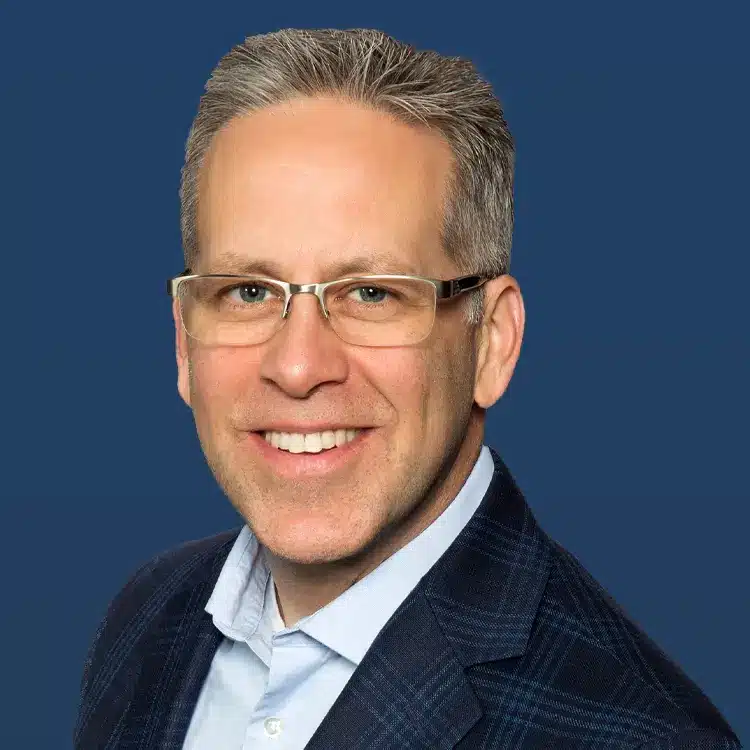
Meet the expert:
Daniel J. Stewart is President, Executive Consultant, and Coach at Stewart Leadership, and co-author of the award-winning LEAD NOW! A Personal Leadership Coaching Guide for Results-Driven Leaders. With more than 20 years advising senior leaders on talent development, organizational design, and change, he has coached and trained thousands of leaders around the world, and has coached other coaches to sharpen their craft. His client work spans organizations such as JetBlue, Lockheed Martin, Kohl's, and Aurora Health Care. Daniel brings a practical view of coaching as the everyday habit that turns managers into leaders their people want to follow.
Build Leaders in the Flow of the Work
The moments and conversations in this session are where development starts. LEAD NOW! is where Stewart Leadership builds them into how managers lead every day, combining the LEAD NOW! model, a LEAD NOW! 360 assessment, and coaching between sessions so development keeps going long after the webinar ends. Leadership is the highest-leverage investment an organization can make, and it pays back in the work, not in the classroom.
Keep Learning
Common Questions Leaders Have
What is the most effective way to develop leaders?
The most effective way to develop leaders is through real projects, tasks, and assignments in their everyday work, supported by a manager who holds regular development conversations with them. In the survey, this approach ranked number one at every level of the organization, ahead of workshops, webinars, and formal programs. Development that is integrated into the work, rather than treated as a separate event, is what turns learning into changed behavior.
What are the moments that matter in the employee experience?
Moments that matter are the specific experiences employees remember most and use to judge whether their organization genuinely develops them. They include onboarding and the first day, a coaching or feedback discussion, a performance review, receiving recognition, a promotion, and a pay-raise conversation. Mapping these moments, what they are now versus what you want them to be, shows where to focus development effort for the biggest gain in engagement and retention.
How can a manager coach their people day to day?
Managers coach most effectively in the flow of work, not only in scheduled sessions. That means catching informal coachable moments, asking more than telling, building a trusting relationship, reading how open each person is to feedback, creating a safe setting, and using small pockets of time well. For a deeper treatment of manager coaching, see the Unleash Your Inner Coach webinar.
What goes into a strong leadership development plan?
A strong leadership development plan is aligned to the organization's priorities and broken into 90-day goals at the individual level, with a personal development plan owned jointly by each employee and their manager. In the survey, only about half of organizations had a plan they were confident in, and the most common request was for tighter alignment between development and business strategy. Confidence in a plan comes from showing progress, not just from having one.
Why does leadership development fail?
Leadership development most often stalls when it competes with other priorities and is run as a one-off event instead of being built into daily work. Leaders named competing priorities, budget, and a shortage of internal resources as the top barriers, and named strategy-and-goal alignment as the single change that would help most. The fix is to integrate development into the work people are already doing, so it stops competing with the day job.
Explore More Webinars:

Webinar
Getting Comfortable With Your Discomfort: A DEI Discussion

Webinar
Building a Resilient Workforce

Webinar